
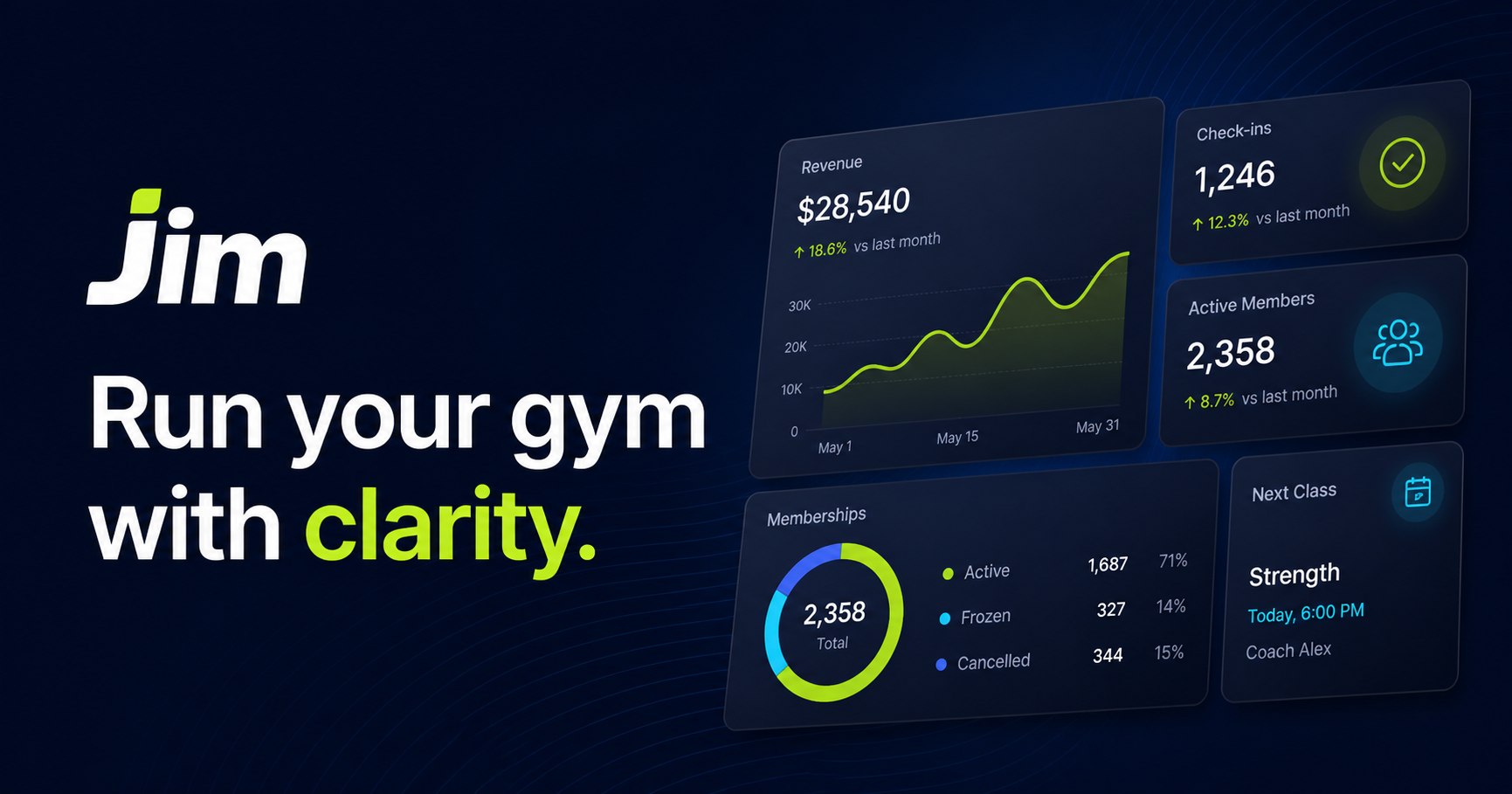
Running a profitable fitness business requires more than excellent equipment and motivated trainers. Every day, the team must capture prospects, register members, collect fees, validate access, schedule classes, monitor stock, respond to questions and understand performance. A gym management system brings these responsibilities into one organised workspace so employees can work quickly and owners can make decisions using dependable information.
This complete guide explains how gym management software works, which capabilities matter, how Kenyan gyms can use M-Pesa-enabled billing, and how to evaluate implementation, security, pricing and return on investment. It is written for independent gyms, health clubs, fitness studios, personal trainers and growing multi-branch operators.
What Is a Gym Management System?
A gym management system is specialised software for managing the daily and commercial operations of a fitness business. It centralises member profiles and connects those profiles to plans, invoices, payments, visits, programmes, classes and communication. Instead of relying on unrelated spreadsheets, notebooks, payment messages and applications, the team works from one consistent record.
The platform becomes an operational source of truth. A receptionist can determine whether a member has valid access. Finance staff can identify an unpaid invoice and review its transaction history. A trainer can access an assigned programme. A manager can analyse attendance and revenue without asking several employees to assemble separate reports.
Modern systems are commonly cloud based. Authorised employees can securely access the current workspace from an internet-connected computer, tablet or phone. Changes become available immediately, reducing duplicate entry and conflicting versions. Role and branch permissions should ensure that each user can only view or change information required for their responsibilities.
Gym software is not simply a digital member list. A complete platform connects the journey from first enquiry through trial, enrolment, payment, attendance, engagement and renewal. This relationship between records is what makes automation and trustworthy reporting possible.
Why Modern Fitness Businesses Need Gym Software
Manual administration may appear affordable when a facility has only a few members. Complexity then grows quickly. One file tracks contacts, another tracks expiry dates, mobile-money statements record payments, and a paper register records visits. Employees spend valuable time reconciling sources and may still be unable to answer basic questions confidently.
A connected gym management system reduces that friction. When a membership is activated, the plan, billing dates and access status stay associated with the person. When payment is confirmed, the balance and transaction history can update together. When the person checks in, the visit contributes to attendance reporting and future retention decisions.
The greatest benefit is visibility. Owners can see what is happening while there is still time to act: plans approaching expiry, invoices becoming overdue, attendance declining, classes reaching capacity or products running low. Timely visibility turns administration into active management.
Problems a good platform should solve
- Member details are incomplete, duplicated or stored on personal devices.
- Renewals are missed because expiry dates are not monitored consistently.
- Payments cannot be matched easily to members and invoices.
- Reception cannot validate access quickly during busy periods.
- Owners lack reliable revenue, attendance and retention reports.
- Branches follow different processes and cannot share oversight.
- Prospects and inactive members receive little structured follow-up.
Software also improves consistency. A documented workflow continues even when an employee is unavailable. New staff can be trained around visible steps, while owners can review exceptions instead of supervising every routine task. This reduces dependence on individual memory and protects service quality as the business grows.
Essential Gym Management System Features
Feature lists can be misleading because two platforms may use the same label while supporting very different processes. Evaluate whether each feature completes the real task from beginning to end. “Billing,” for example, should connect a member, plan, invoice, due date, payment, balance and receipt rather than simply storing an amount.
The essential foundation includes member profiles, configurable plans, invoices, payment tracking, check-ins, staff permissions, dashboards and exports. Most gyms also benefit from lead management, reminders, classes, trainer tools, documents, inventory and point of sale. Multi-location operators require branch-aware access and consolidated reporting.
Usability deserves equal attention. The most advanced feature has little value if receptionists cannot use it at peak time. Common tasks should require few steps, important status information should be obvious, and validation should prevent avoidable errors. Mobile responsiveness matters for owners and trainers who work away from a desk.

Membership Management from Enquiry to Renewal
Membership administration sits at the centre of gym operations. A complete profile should contain accurate contact information, emergency details where appropriate, home branch, current status, assigned plan and relevant notes. It should connect to payment and attendance history so the employee serving the member does not need to search elsewhere.
Configurable plans allow the software to represent the gym’s real commercial model: monthly subscriptions, fixed-duration packages, day access, class packs, corporate arrangements or personal-training bundles. Administrators should define prices, duration, branch access and included services without requiring a developer.
Expiry visibility is crucial. A useful dashboard separates active, expired and soon-to-expire plans and helps the team organise follow-up. Automated reminders support the process, while human contact remains available for valuable members or situations requiring clarification. This combination protects revenue without making communication impersonal.
Gyms moving from spreadsheets should demand controlled imports. The provider should supply a template, validate required fields, identify duplicate contacts and show errors before creating records. A careful import improves the new database and makes later reporting much more credible.
Member self-service can reduce reception workload. Depending on the business model, members may need to view invoices, update selected details, book sessions or access receipts. Self-service must still respect approval rules and should never expose internal notes or data belonging to another member.
Gym Billing, Invoices and M-Pesa Payments
Billing is one of the strongest reasons to adopt a gym management system because missed renewals affect cash flow immediately. The platform should generate clear invoices, record due dates, display balances, support permitted partial payments and preserve a transaction history for reconciliation.
For a gym management system in Kenya, M-Pesa support is particularly valuable. A connected workflow can initiate an STK Push, receive confirmation and associate the successful transaction with the correct invoice. This is faster and safer than asking staff to interpret screenshots or search long statements manually.
Integration does not remove the need for controls. Failed, cancelled, duplicate and delayed responses must be handled clearly. Staff need to see whether a request is pending, successful or unsuccessful. Unique transaction references should prevent the same payment from being applied twice, and exceptions should remain available for review.

Recurring billing workflows should make upcoming and overdue obligations visible. Payment reminders need sensible timing and language. Receipts should identify the member, invoice, amount, method and reference. Refunds, credits and adjustments must remain traceable so that today’s balance can be explained months later.
Strong billing reports answer practical questions: How much was collected in this period? Which invoices remain unpaid? Which plans generate the most revenue? What percentage of expected recurring income has arrived? Which branch has the largest outstanding balance? These answers help owners protect cash flow before month end.
Check-Ins, Attendance and Access Control
A gym attendance system should make entry fast without weakening control. Reception needs a simple way to find or scan a member, confirm identity, validate the plan and record the visit. If access is denied, the reason should be clear—such as an expired membership or restricted branch—so staff can explain the next step professionally.
QR codes and member numbers are practical for many facilities. Biometric readers, turnstiles and smart-door devices may suit unattended or high-volume gyms, but hardware integration must be examined carefully. Ask what happens during an internet outage, how devices synchronise, who supports them and whether reception has a controlled fallback.

Attendance data has strategic value. A gradual decline in visits may indicate disengagement before cancellation. Managers can build follow-up lists based on absence, understand peak hours, adjust staffing and measure which classes support consistent participation. Attendance therefore contributes to operations, member experience and retention.
Privacy should influence attendance design. Biometric data is especially sensitive and should not be collected simply because a device makes it possible. Use the least intrusive method that meets the business requirement, document the purpose and protect retention and access appropriately.
Class Scheduling, Bookings and Trainer Management
Facilities offering group classes need a shared timetable connecting session, location, instructor, capacity and enrolled members. Without one source, schedule changes are easily communicated to some people and missed by others. Central scheduling gives reception, trainers and management the same current information.
Useful capabilities include recurring sessions, waiting lists, cancellations, attendance and instructor assignment. The booking experience should show availability accurately and prevent overbooking. Cancellation policies may protect valuable capacity, but they must remain understandable to members and manageable for staff.

Personal-training workflows can include an exercise library, reusable workout templates, individual programmes, goals, measurements and trainer notes. Sensitive details should be limited to authorised roles. Owners can then review trainer delivery and programme activity without exposing every member record to every employee.
Class reports should compare scheduled capacity with bookings and actual attendance. A popular timetable is not necessarily profitable if no-shows are high or staffing costs are ignored. Combining utilisation, revenue and member feedback helps management make better programming decisions.
Gym CRM, Lead Conversion and Member Retention
Prospects arrive through calls, WhatsApp, web forms, social media, referrals and walk-ins. A gym CRM places enquiries in a shared pipeline with stages such as new, contacted, trial booked, trial completed, converted or lost. Every lead should have an owner and a clear next action.
This prevents opportunities from disappearing inside personal inboxes. Managers can measure response time, trial attendance and conversion while staff retain notes from previous conversations. When a prospect joins, information should move naturally into membership onboarding instead of being typed again.
Retention begins before cancellation. Combine renewal dates, visit frequency, unresolved balances and engagement history to identify members who may require attention. Thoughtful reminders, progress conversations and timely service recovery are more effective than sending identical promotions to everyone.
Communication must respect consent and relevance. SMS, email or WhatsApp may cover invoices, confirmations, expiry reminders and class changes. The gym should avoid excessive messages, protect contact details and provide an appropriate way to manage promotional preferences.
Reports and Analytics Gym Owners Need
A report is valuable when it supports a decision. A beautiful dashboard that cannot explain how a number was calculated may create more confusion than clarity. Every metric should use consistent definitions, respect the selected date range and allow authorised people to investigate underlying records.
Financial reporting should cover collected and invoiced revenue, outstanding balances, refunds, payment methods, revenue by plan and revenue by branch. Membership reporting should show joins, renewals, expiries, cancellations, active membership and movement over time. Attendance reporting should cover visits, unique attendees, peak periods, denied entries and absent-member segments.
Sales reports can track lead sources, pipeline stages, trials and conversion. Class reports can measure bookings, attendance, cancellations, utilisation and instructor activity. Inventory reports should show stock movements, low-stock products and sales where the gym operates a reception shop.
Key performance indicators worth monitoring
- Active members, new joins, renewals, expiries and cancellations.
- Recurring revenue, collections, refunds and outstanding balances.
- Membership retention, churn and average member lifetime.
- Visit frequency, inactive members and peak attendance periods.
- Lead response, trial booking, attendance and conversion.
- Class utilisation and instructor delivery.
- Revenue and operations by branch.
Exports remain important even with excellent dashboards. Owners may require CSV or Excel data for accounting, audit or independent analysis, while PDF and print layouts support formal sharing. Export rights should be restricted because a member database is commercially and personally sensitive.
Multi-Branch Gym Management
Expansion introduces new requirements. A branch manager should operate the assigned location without automatically accessing every company record. Owners, however, require consolidated oversight. Multi-branch software balances local responsibility and central management through location-aware roles, records and reports.
Test how the platform handles a member visiting another branch, an employee working at two locations, plans valid at selected facilities, transfers, stock and consolidated finances. These are operational rules rather than cosmetic features, and they become expensive to correct after growth.
Standardisation should not eliminate useful local flexibility. Headquarters may define common plan rules and reporting definitions while allowing authorised managers to organise local classes and staff. The software should make that boundary explicit.
Security, Privacy and Reliability
A gym stores names, contacts, attendance, billing information and sometimes health-related notes. The system should use encrypted connections, authenticated accounts, strong password handling and role permissions. Staff should receive only the access necessary for their work, and access should be removed promptly when employment ends.
Ask providers about backups, recovery, uptime monitoring, updates, auditability, retention and incident response. Establish internal practices too: never share accounts, avoid unnecessary member-list exports, protect reception devices and train employees to recognise suspicious login requests.
Reliability includes operational recovery. The provider should explain what staff can do during connectivity problems and how delayed payment confirmations are reconciled. A dependable support path matters when billing or access issues affect members in real time.
How to Choose the Best Gym Management System
Begin with workflows rather than a long checklist. Document how a lead becomes a member, payments are collected, entry is validated, sessions are booked and decisions are reported. Include the employees who perform these tasks because they understand the real delays and errors.
Separate essential capabilities from optional ones. A small gym may prioritise members, M-Pesa, check-ins and renewals. A multi-location club may require advanced permissions, consolidated reporting, inventory and structured classes. Choosing for the actual operating model reduces cost and implementation difficulty.
Request a demonstration using realistic scenarios. Ask the provider to capture a lead, convert them, assign a plan, issue an invoice, record payment, perform a check-in and show the resulting report. This reveals whether the platform connects operations or merely displays isolated modules.
Questions to ask every provider
- Which capabilities are included and which cost extra?
- How does M-Pesa confirmation connect to invoices?
- Can current members, plans and balances be imported safely?
- Can permissions be limited by module, action and branch?
- Which reports can be filtered, printed and exported?
- How are backups, outages and security incidents handled?
- What onboarding and ongoing support are provided?
- Can the platform scale without losing history?
- Who owns the data and how can it be exported?
Evaluate the provider as well as the product. Clear documentation, responsive support and honest scope are more valuable than a long list of promised future features. Ask for references from similar fitness businesses where appropriate, and ensure commitments that influence the decision appear in writing.
Gym Management System Implementation Plan
Successful implementation combines clean data, clear ownership and adoption. Assign an internal project owner who understands the gym’s rules. Confirm plan names, prices, duration, access, opening balances and current statuses before importing.
Clean source data by removing duplicates, standardising phone numbers and separating fields consistently. Keep a protected backup. Run a small trial import, inspect results and correct mapping before loading the full list. Move historical data only when it has clear operational or compliance value.
Configure roles before inviting employees. Reception, trainers, managers, finance and owners should not receive identical access. Test critical workflows safely and document the agreed steps in short task-based instructions.
Train people through realistic scenarios instead of a broad product tour. Reception should practise finding members, taking payment and resolving denied entry. Managers should practise corrections and reports. Owners should understand how important figures are defined.
Select a controlled launch date, verify opening balances and keep support details accessible. During the first month, monitor incomplete records, payment exceptions, check-in issues and user behaviour. Early review prevents temporary workarounds from becoming permanent bad processes.
Pricing, Total Cost and Return on Investment
Gym management software may be priced by members, staff, branches, modules or a combination. Some vendors add setup, migration, messaging, payment-processing, training or hardware fees. Compare the total cost for twelve months and model how it changes with growth.
The cheapest subscription is not necessarily the lowest-cost decision. Poor billing controls, difficult reporting or weak support can consume time and lose revenue. Paying for complex features the team will not use also creates waste. The right package fits core requirements today and provides a credible upgrade path.
Calculate return using measurable improvements: administration hours saved, renewals recovered, reconciliation reduced, conversion improved and redundant subscriptions removed. A modest improvement in collections or retention can exceed the system fee, but only when employees adopt the workflow consistently.
Member Experience and Mobile Access
A gym management system must make work easier for employees, but it should also reduce friction for members. People expect accurate balances, quick payment confirmation, dependable bookings and clear communication. They should not have to repeat personal details every time a different staff member serves them. Connected records allow the team to provide continuity without depending on memory.
A member portal or mobile-friendly experience can allow customers to review an invoice, obtain a receipt, check a membership status or book an available class. Decide which actions truly benefit your members before requiring another application download. For some audiences, a responsive web page and well-timed messages may be more useful than a feature-heavy native app.
Digital convenience should never remove accessible human support. Members will still need help with an incorrect balance, changed phone number, frozen plan or exceptional booking. Employees require permission to resolve appropriate issues, and the platform should preserve a history of important adjustments. This combination of convenience and accountable service builds trust.
Measure experience using practical signals: time required to enrol, payment-confirmation speed, check-in time, booking success, complaint themes and renewal behaviour. Software should make these moments smoother, not create an additional barrier between the business and its community.
Inventory, Equipment and Front-Desk Sales
Many fitness facilities sell water, supplements, clothing, accessories or other products. When those sales occur outside the main system, inventory and revenue reports become incomplete. A connected catalogue can associate products with categories, suppliers, prices and stock quantities, while point-of-sale transactions reduce available stock and contribute to business reporting.
Useful stock controls include receiving inventory, recording adjustments, transferring items between branches, setting reorder levels and reviewing movement history. Each adjustment should record a reason and responsible user. Negative quantities and silent edits make reports unreliable, so validation and auditability are more important than an attractive product grid.
Equipment management serves a different purpose. Owners may need an asset register containing identification, location, purchase information, service schedule and condition. Maintenance reminders help protect member safety and reduce unplanned downtime. Fault reports should be visible to the people responsible for resolution rather than remaining in informal chat conversations.
Do not select gym software solely because it includes inventory or equipment screens. Test whether the workflows match the scale of the business. A simple reception shop may need basic stock and sales, while a multi-branch health club may require purchasing, transfers, suppliers and detailed accountability.
Automation Without Losing Control
Automation is valuable when the rule is clear, the input is reliable and the outcome can be reviewed. Good examples include creating scheduled invoices, identifying approaching expiry, sending an approved reminder or updating payment status after verified confirmation. These actions remove repetitive work while preserving a traceable process.
Avoid automating an unclear process. If staff disagree about when a membership should expire or how a partial payment is handled, software will reproduce the confusion faster. Establish the business rule, configure it deliberately, test ordinary and exceptional cases, and tell employees what the system will do.
Every automation should have an owner and an exception path. Someone must review failed payment requests, undelivered messages, rejected imports and records that cannot be matched confidently. Dashboards and queues should surface failures instead of hiding them behind a successful total.
Responsible automation also protects communication quality. A member who has already paid should not receive an overdue reminder because systems synchronised slowly. A cancelled class should trigger an accurate update, and marketing messages should respect consent. Effective gym management software combines speed with safeguards rather than treating automation as an excuse to remove oversight.
Common Gym Software Mistakes to Avoid
The first common mistake is buying only for the feature count. A long list does not prove that the daily workflow is coherent. A focused system that connects the essential journey may deliver more value than a large platform whose modules require repeated entry. Ask to see real tasks completed with real constraints.
The second mistake is migrating poor data without cleaning it. Duplicate members, inconsistent phone formats and outdated balances immediately weaken trust in the new gym management system. Treat preparation as part of implementation and obtain agreement about which source is authoritative.
The third mistake is giving every employee administrator access because permissions take time to configure. Excess access increases the chance of accidental changes and exposes information unnecessarily. Begin with limited roles and expand only where responsibilities justify it.
Other mistakes include launching without staff training, failing to reconcile opening balances, ignoring unsuccessful integrations and keeping parallel spreadsheets indefinitely. Short-term parallel checking can support a controlled transition, but permanent duplication creates conflicting records. Set a date when the new platform becomes the official source and explain the escalation process.
Finally, do not confuse installation with success. Review adoption and outcomes after launch. Are employees completing records? Are more renewals collected on time? Can the owner obtain reports faster? Are members entering with fewer delays? Improvement should be demonstrated through results.
Preparing Your Gym Management System for Growth
A platform should fit the gym today without creating a dead end tomorrow. Growth may mean more members, a second location, a larger sales team, additional class formats or new payment channels. Ask how limits and pricing change, how historical information is preserved during an upgrade and whether new branches can follow a consistent template.
Data structure matters. Standard plan names, branch assignments, payment references and reporting definitions allow the business to compare performance over time. If every location invents its own terminology, consolidated reports require manual interpretation. Establish governance early while the organisation is still manageable.
Integration capabilities may become important as the business matures. Accounting exports, payment services, messaging tools, access devices and public forms should exchange only the information required for a defined purpose. Evaluate authentication, error handling and support ownership before connecting critical systems.
Growth also changes management rhythm. A single-site owner can observe activity directly, while a multi-branch operator needs scheduled reviews and exception reporting. Configure dashboards around decisions: collections requiring follow-up, branches outside expected performance, unusually low attendance or capacity constraints. The goal is not to collect every possible metric; it is to make important changes visible early.
Choose a provider willing to explain the roadmap without promising certainty. Technology, payments and customer expectations change. A sustainable platform maintains security, improves usability and listens to operational needs while protecting the reliability of existing workflows.
Why Jim Is Built for Kenyan Gyms
Jim is a cloud-based gym management system designed to connect memberships, billing, M-Pesa workflows, check-ins, staff, classes, workouts, inventory and reports in one workspace. It supports an independent facility beginning with essential controls and a growing organisation requiring branch-aware operations.
Explore Jim’s pages for gym management system in Kenya, gym billing software, gym attendance tracking, multi-branch gym software and gym management software pricing.
Final Gym Management System Checklist
Before making a decision, confirm that the platform supports the complete member journey, the payment methods your customers actually use and the reports management will review regularly. Verify data import, staff permissions, branch controls, exports, backups and support. Ask employees to test common front-desk tasks and ask decision-makers to validate the financial definitions. Record any important commitments made during the demonstration.
A well-selected gym management system should give the business one dependable operational record, reduce repetitive administration and reveal problems early enough to address them. The goal is not to digitise every old habit. It is to create a clearer, safer and more consistent way to serve members and manage growth. Begin with accurate data and essential workflows, measure adoption after launch, and introduce additional automation only when the underlying rules are understood. That disciplined approach produces far more value than implementing many disconnected features at once.
Frequently Asked Questions
What is a gym management system?
A gym management system is software that centralises member records, memberships, billing, payments, check-ins, classes, staff permissions, communication and reporting.
What is the best gym management system for a small gym?
Choose a simple system with transparent pricing, local payment support, membership and attendance tools, useful reports and room to grow.
Can gym software accept M-Pesa payments?
Yes. A platform designed for Kenya can connect invoices to M-Pesa workflows, including STK Push and payment confirmation when its supported integration is configured.
How much does gym management software cost?
Pricing depends on member capacity, staff, branches and modules. Compare subscription, setup, migration, messaging, support and payment fees.
Can existing members be imported from Excel?
A capable platform should supply a CSV template, validate records and identify rows that need correction before importing.
Can gym software improve member retention?
It supports retention by identifying expiring plans, declining visits and unpaid balances early, then enabling timely follow-up.
Can one system manage multiple branches?
Yes. Multi-branch software can separate location responsibilities while giving authorised owners consolidated reporting.
Is gym member information secure?
It should be protected with authenticated access, role permissions, encrypted connections, backups and responsible data practices.
Take the next step
Run Your Gym from One Clear Workspace
Replace fragmented records with connected memberships, M-Pesa payments, check-ins and reports. Review the packages or create a Jim workspace around your gym.