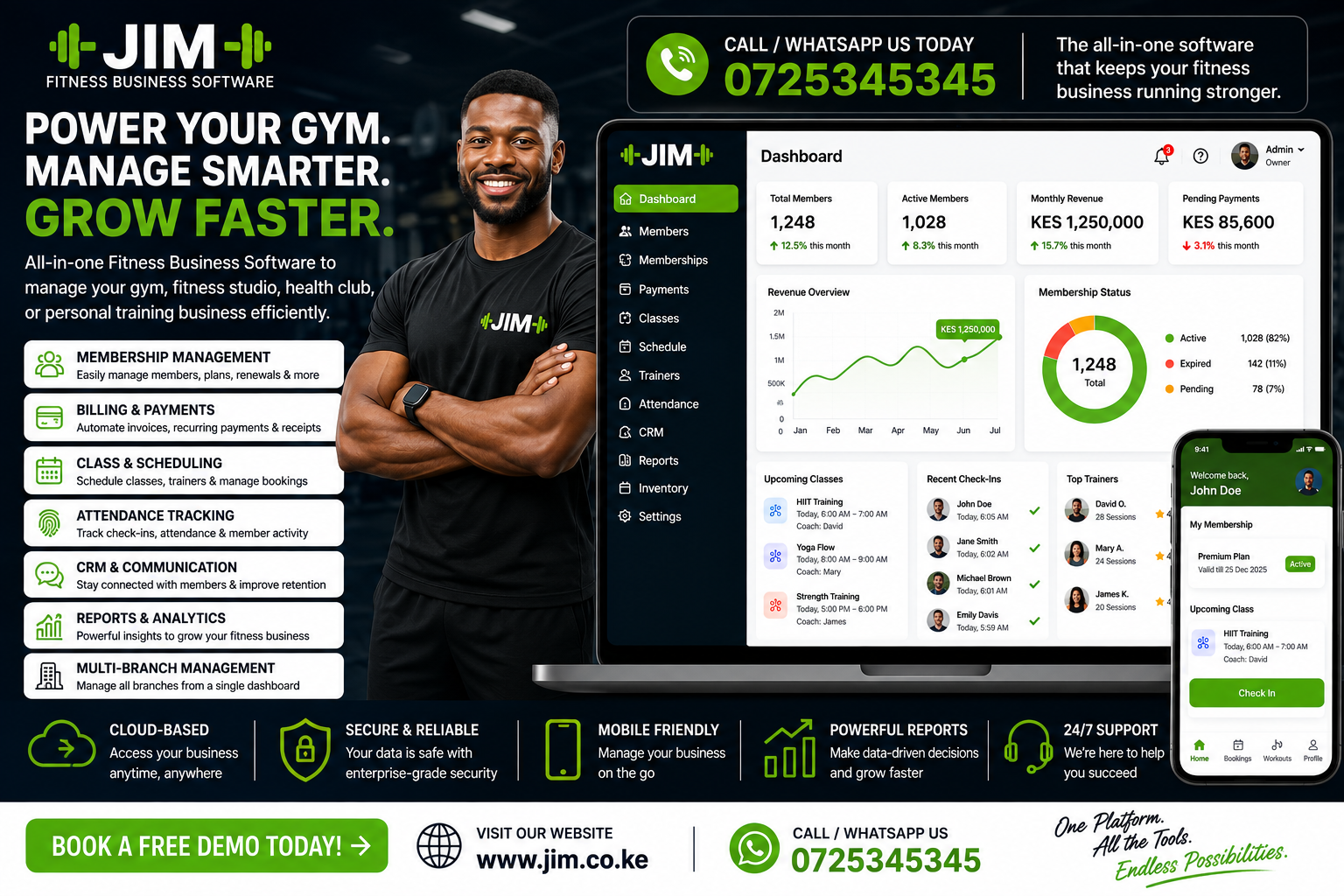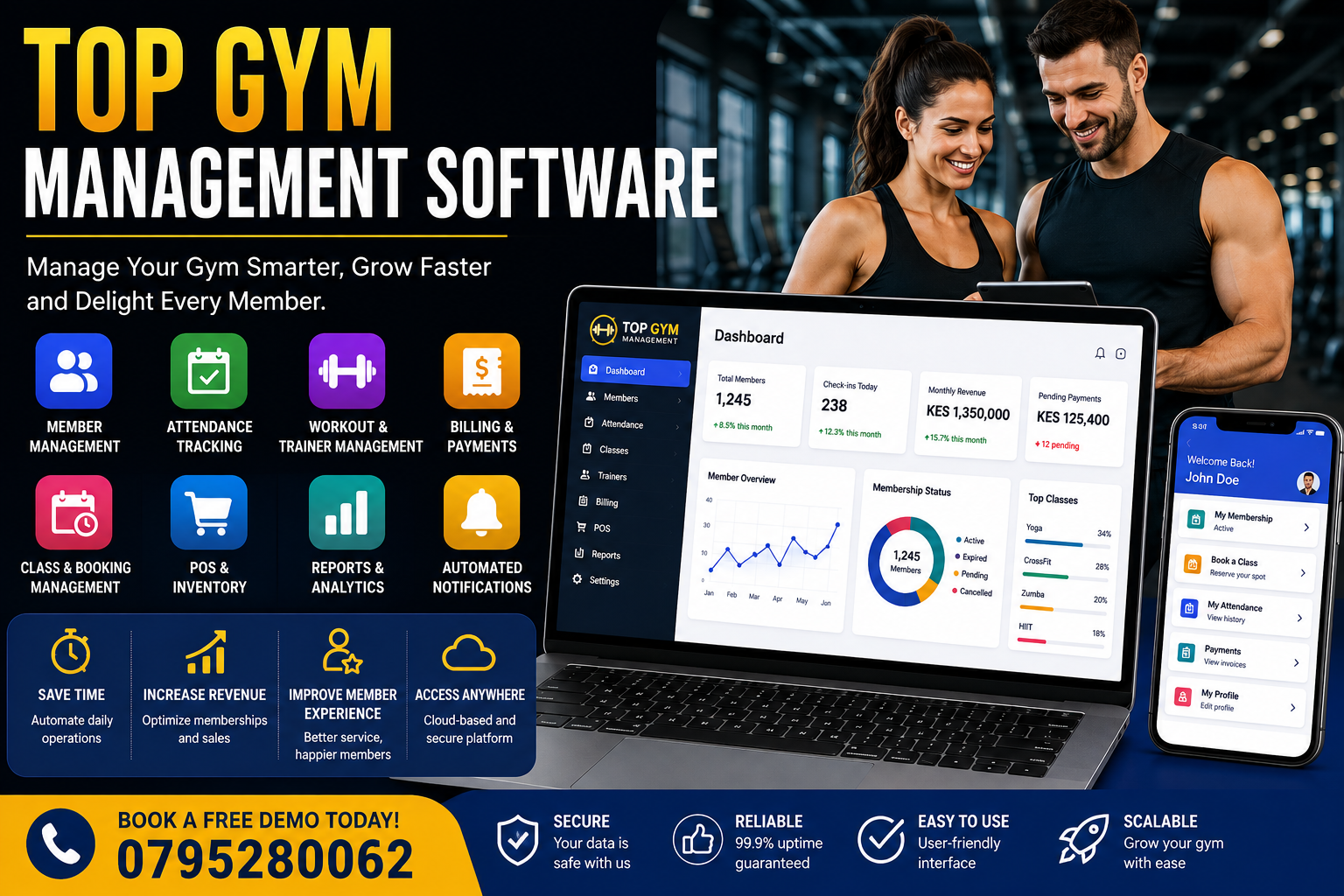
Running a successful gym requires much more than quality equipment and experienced trainers. Gym owners and managers must attract new members, process payments, schedule classes, coordinate staff, monitor attendance, manage customer relationships, and ensure daily operations run efficiently. When these tasks are managed through spreadsheets, manual records, or multiple disconnected applications, valuable time is lost, errors increase, and member satisfaction can decline.
This is why investing in the Top Gym Management Software has become essential for modern fitness businesses. The Top Gym Management Software brings membership management, billing, attendance tracking, class scheduling, trainer management, reporting, and customer communication into one centralized cloud-based platform. By automating routine tasks, gym owners can focus on delivering exceptional fitness experiences while growing their businesses.
Whether you operate a boutique fitness studio, a health club, a personal training center, a CrossFit facility, or a multi-branch gym, choosing the Top Gym Management Software can improve operational efficiency, increase member retention, and boost profitability. Different fitness businesses have different needs. A yoga studio may prioritize online class bookings and waitlists, while a large fitness club may require advanced membership billing, access control, staff management, and detailed analytics. Multi-location gyms often need centralized reporting and branch management, whereas personal trainers may focus on scheduling and client communication.
This comprehensive guide explores everything you need to know about the Top Gym Management Software, including its key features, benefits, pricing considerations, essential integrations, and how to compare the best solutions available. By the end of this guide, you’ll have the knowledge to confidently choose the Top Gym Management Software that fits your current business needs and supports your long-term growth.
Gym management software is a digital platform that helps fitness businesses manage administrative, financial, and member-facing activities. Instead of using one application for scheduling, another for payments, and separate files for member records, a gym management system centralizes these functions.
Depending on the product, a platform may include:
– Membership registration and account management
– Recurring billing and payment processing
– Class, appointment, and facility scheduling
– Online booking and self-service tools
– Member communication and marketing automation
– Check-in and door access management
– Staff scheduling, permissions, and payroll support
– Lead tracking and sales pipelines
– Retail or point-of-sale functions
– Business reports and performance dashboards
– Mobile applications for members and employees
– Integrations with websites, accounting systems, and fitness devices
Cloud-based platforms are now common because they allow owners and employees to access business information from different devices and locations. Updates are typically managed by the provider, reducing the need for in-house technical maintenance. Some platforms also offer branded mobile apps, allowing members to book classes, update payment details, purchase services, and receive notifications.
The best system is not necessarily the one with the longest feature list. It is the one that reliably supports the workflows your team uses most often.
Why Gyms Need Management Software
Fitness businesses operate in a recurring-revenue environment. Profitability often depends on acquiring the right members, keeping them engaged, and collecting payments consistently. Small inefficiencies can compound quickly. Missed follow-ups reduce conversions, failed payments create revenue leakage, and confusing booking experiences frustrate members.
The top gym management software can help solve these problems in several ways.
It reduces administrative work
Automated billing, digital waivers, online registration, attendance tracking, and self-service booking reduce the number of repetitive tasks employees must complete. Staff can spend more time helping members and less time updating spreadsheets or answering routine scheduling questions.
It improves the member experience
Members expect convenience. They want to book a class, join a waitlist, purchase a package, or update a card without calling the front desk. A good management platform makes these actions quick and intuitive across web and mobile devices.
It supports more reliable revenue
Recurring billing tools can automate membership charges, flag unsuccessful payments, send reminders, and support account updates. Sales reports help managers understand which memberships, classes, and services generate the strongest results.
It gives leaders better information
Accurate reports reveal attendance trends, membership growth, cancellation patterns, lead conversion rates, and revenue performance. Instead of making decisions based on assumptions, operators can use real business data.
It helps a business scale
Processes that work for 100 members may break down at 1,000. A centralized platform creates consistent workflows and makes it easier to add staff, expand services, or open new locations.
How to Identify the Top Gym Management Software
The phrase “top” can be misleading because software quality depends on context. A feature-rich enterprise platform may be unnecessarily complex for a single-room studio. A simple booking tool may be perfect for a new instructor but inadequate for a full-service health club.
Rather than looking for one universal winner, evaluate each product against the following criteria.
1. Membership management
The platform should make it easy to create membership plans, manage account details, apply discounts, pause memberships, process upgrades, and record cancellations. Look for flexible rules if you sell recurring memberships, class packs, day passes, family plans, corporate memberships, or limited-time promotions.
The system should also provide a clear member history. Employees may need to see purchases, visits, outstanding balances, signed waivers, notes, and previous communication without searching across multiple screens.
2. Billing and payment processing
Payment tools are central to gym operations. Review the types of payments supported, processing fees, payout timing, contract requirements, and options for recurring billing. Find out whether the system can automatically retry failed payments or send members secure links to update their billing information.
Some providers require customers to use an integrated payment processor. This may simplify support and reporting, but it can also affect overall cost. Compare the total financial impact rather than focusing only on the software subscription.
3. Scheduling and booking
For class-based businesses, scheduling quality can determine how smoothly the entire operation runs. The system should support recurring sessions, instructor assignments, capacity limits, cancellations, waitlists, booking windows, and no-show policies.
If you offer one-to-one services, confirm that the platform handles appointments as well as classes. Facilities that rent rooms, courts, or equipment may also need resource scheduling.
4. Ease of use
Powerful software creates little value if employees find it difficult to use. Ask for a live demonstration and involve the people who will work with the system every day. Evaluate common tasks such as registering a new member, processing a sale, checking someone in, rescheduling an appointment, and issuing a refund.
The member experience matters just as much. Test the registration and booking journey from a customer’s perspective, particularly on a phone.
5. Sales and lead management
Many gym platforms include customer relationship management features. These tools can capture inquiries, assign follow-up tasks, record conversations, and show where prospects are in the sales process.
Useful automation may include welcome sequences, trial reminders, abandoned-purchase messages, birthday offers, renewal notices, and win-back campaigns. Make sure communication controls allow members to manage their preferences and help your business follow applicable privacy and marketing rules.
6. Reporting and analytics
At a minimum, gym software should report on active memberships, new sales, cancellations, attendance, revenue, outstanding balances, and class utilization. More advanced systems may provide location comparisons, cohort analysis, sales forecasts, staff performance, and retention indicators.
Check whether reports can be filtered, scheduled, exported, and shared. A visually impressive dashboard is useful, but access to complete and accurate data is more important.
7. Integrations
No platform operates in isolation. Your gym may need connections with accounting software, email marketing tools, access-control hardware, business intelligence systems, payroll services, or a website content management system.
Ask which integrations are native, which depend on third-party automation services, and which require custom development. If an integration is essential, test it before committing.
8. Security, privacy, and reliability
Gym software stores sensitive personal and payment-related information. Ask potential vendors how they protect data, manage user permissions, maintain backups, respond to incidents, and support relevant regulatory obligations. Payment card information should be handled through appropriate secure processes.
Also investigate service reliability. Understand how the platform works during an internet interruption and whether essential check-in or access functions have contingency options.
9. Customer support and onboarding
Moving to new software affects billing, staff routines, member records, and communication. Strong onboarding can be the difference between a smooth transition and months of frustration.
Compare migration assistance, implementation timelines, training resources, support channels, and service hours. If your gym operates early mornings, evenings, and weekends, limited support availability could become a serious issue.
10. Scalability
Consider what the business may need two or three years from now. Can the system support additional locations, a larger member database, new services, and more sophisticated reporting? Can permissions be configured for front-desk staff, trainers, managers, franchisees, and administrators?
A system should not force you to pay for enterprise complexity before you need it, but it should provide a realistic growth path.
Comparisons are easier when products are grouped by the types of businesses they serve. Most platforms fall into one or more of the following categories.
All-in-one software for full-service gyms
These platforms combine membership administration, recurring billing, check-in, access management, sales, reporting, and staff tools. They are often designed for traditional gyms, health clubs, recreation facilities, and multi-service fitness centers.
An all-in-one system can reduce the number of vendors a business manages. The tradeoff is that setup may be more involved, and employees may need structured training. Buyers should pay close attention to implementation support, payment terms, and hardware compatibility.
Boutique fitness studio software
Boutique platforms typically emphasize class scheduling, packages, waitlists, instructor management, and an attractive member booking experience. They may be well suited to yoga, Pilates, cycling, dance, barre, boxing, and small-group training studios.
Marketing tools are often prominent because boutique studios depend on frequent engagement and repeat class purchases. Owners should compare booking usability, branded app options, automated communication, and the ability to manage workshops or special events.
Personal trainer and coaching software
Independent trainers need a different combination of tools. They may prioritize appointment scheduling, client notes, workout programming, habit tracking, progress measurements, video delivery, and online coaching.
Some coaching platforms provide limited membership billing or front-desk functionality. Trainers planning to open a physical gym should confirm that the system can grow with that business model.
Enterprise and multi-location software
Multi-site operators need standardized processes alongside location-level flexibility. Enterprise platforms may provide centralized reporting, role-based access, location comparisons, franchise management, corporate account structures, and system integrations.
The evaluation process should include technical, operational, financial, and security stakeholders. Buyers should request clear service commitments, implementation plans, data ownership terms, and integration documentation.
Community, nonprofit, and recreation software
Recreation centers and community organizations may manage far more than gym memberships. Their software may need to support camps, swimming lessons, facility rentals, family accounts, scholarships, childcare, leagues, and community programs.
A conventional gym platform may not handle these needs well. Organizations should map every major program and registration workflow before shortlisting vendors.
Budget-friendly software for small gyms
New and independent fitness businesses may not need an extensive technology stack. A lower-cost system with reliable billing, scheduling, member records, and basic reports can be more valuable than a complicated platform with unused features.
However, buyers should watch for limits on members, staff accounts, email messages, locations, integrations, or reports. Low advertised pricing may exclude payment fees, setup costs, mobile apps, premium support, or important add-ons.
Essential Features to Prioritize
Feature lists can become overwhelming, so begin with the capabilities that affect revenue, operations, and member satisfaction most directly.
Automated recurring payments
Recurring billing should allow the business to define payment schedules, collect membership fees, issue receipts, and handle unsuccessful transactions. Look for configurable reminders and a simple process for members to update expired cards. Effective billing automation protects cash flow without requiring employees to chase every late payment manually.
Online joining and digital waivers
A prospect should be able to select a plan, enter their information, accept required terms, sign a waiver, and pay from a mobile device. Every unnecessary step increases the chance that a prospective member will abandon registration.
Member self-service
Members should be able to manage routine account tasks without staff assistance. Depending on your policies, that may include booking, cancellations, purchases, profile changes, payment updates, and membership requests.
Self-service is valuable only when controls are clear. The system should enforce booking deadlines, cancellation rules, membership restrictions, and capacity limits automatically.
Attendance and access control
Check-in tools help a gym understand usage and confirm membership status. Facilities with unmanned hours may also need door access based on active membership rules. If you already own scanners, locks, turnstiles, or access cards, verify compatibility before selecting software.
Communication automation
Targeted communication can improve onboarding and retention. Common workflows include messages for new members, inactive members, upcoming appointments, class changes, expiring packages, failed payments, and membership anniversaries.
Avoid excessive automation. Messages should feel relevant, use accurate account data, and make it easy for recipients to control nonessential communication.
Retention tools
Retention starts with visibility. A platform may help identify members whose visit frequency is declining, accounts with repeated payment failures, or clients who have not booked recently. Staff can then reach out before the member disengages completely.
Software cannot replace a strong community or excellent coaching, but it can help teams notice risk signals earlier.
Actionable reports
The most useful reports answer operational questions: Which classes are consistently full? Which membership plan retains customers longest? When is the gym busiest? How many trials convert? Why are members cancelling? How much revenue is at risk because of failed payments?
Choose a system that makes these answers easy to find and understand.
How to Compare Gym Management Software Pricing
Software pricing is rarely as simple as one monthly fee. To calculate total cost, consider every required component.
Potential costs include:
– Monthly or annual subscription fees
– One-time setup and implementation charges
– Data migration fees
– Payment processing rates and transaction charges
– Fees for text messages or email volume
– Branded mobile app charges
– Access control hardware and installation
– Additional staff, location, or member fees
– Premium support or training packages
– Integration or API access fees
– Contract termination or data export costs
Create a three-year cost estimate based on realistic membership and transaction volume. A system with a higher subscription may be less expensive overall if it includes services that another provider charges for separately.
Cost should also be weighed against operational value. If automation saves dozens of staff hours, improves payment recovery, or helps convert more prospects, the platform may generate a meaningful return. Vendors should be willing to explain pricing in writing and show how costs change as the business grows.
A Step-by-Step Selection Process
Choosing the top gym management software is easier when the decision follows a structured process.
Step 1: Document your current workflows
Write down how your business currently handles leads, joining, payments, bookings, check-ins, communication, cancellations, reporting, and staff access. Note where errors, delays, and duplicate work occur.
This creates a practical requirements list based on real operations rather than appealing product demonstrations.
Step 2: Separate requirements from preferences
Classify features as essential, valuable, or optional. Essential requirements might include recurring billing, a specific door-access integration, or family memberships. Optional preferences might include a branded app or advanced marketing automation.
This distinction prevents attractive extras from distracting decision-makers from critical business needs.
Step 3: Build a focused shortlist
Select a small number of providers that clearly serve your business type and size. Review product documentation, independent feedback, contract terms, and support availability. Avoid inviting too many vendors into the process, as excessive options can make comparison harder.
Step 4: Request workflow-based demonstrations
Give each vendor the same scenarios to demonstrate. Ask them to show how a lead becomes a member, how a failed payment is handled, how a class waitlist works, how an employee processes a cancellation, and how management reviews performance.
A rehearsed product tour may highlight the strongest features while avoiding weak areas. Scenario-based demonstrations reveal how the software performs in everyday use.
Step 5: Involve employees and members
Front-desk staff, trainers, managers, accountants, and owners see different parts of the operation. Gather their input before making a final decision. If possible, test the member-facing registration and booking experience with a small group of customers.
Step 6: Check references
Speak with businesses similar to yours. Ask about implementation, support responsiveness, billing accuracy, reporting, system reliability, and unexpected costs. References are most useful when they share your business model and approximate size.
Step 7: Review the contract carefully
Understand the contract length, renewal rules, price-change terms, service commitments, payment processing requirements, data ownership, cancellation procedure, and data export options. Seek professional advice where appropriate, particularly for long-term or high-value agreements.
Step 8: Plan implementation before signing
Agree on responsibilities, dates, training, migration scope, testing, and launch support. Identify who will own the project internally. A clear implementation plan reduces disruption and prevents important tasks from being discovered too late.
Questions to Ask During a Software Demo
Prepare questions in advance so every vendor is evaluated consistently:
- Which fitness business types use your platform most successfully?
2. Which features are included in the quoted plan?
3. What additional fees could apply?
4. Can we use our preferred payment processor?
5. How are failed payments managed?
6. Can members join and book easily from a phone?
7. Does the system support our membership and package structures?
8. How does it handle freezes, cancellations, refunds, and charge disputes?
9. Which access-control systems are supported?
10. Can we manage multiple locations under one account?
11. Which reports are included, and can raw data be exported?
12. What native integrations are available?
13. Is API access offered, and does it cost extra?
14. How is customer data protected?
15. What support is available outside standard business hours?
16. Who performs data migration, and what information can be imported?
17. How long does a typical implementation take?
18. What training is provided for administrators and employees?
19. What happens to our data if we leave?
20. Can we test the software before making a long-term commitment?
Record the answers in a comparison sheet. Verbal assurances should be confirmed in product documentation or the final agreement when they influence your decision.
Common Mistakes to Avoid
Choosing on price alone
The lowest-cost product is not always the least expensive solution. Manual workarounds, weak reporting, limited support, and missing integrations create hidden costs. Compare total ownership cost and expected operational value.
Buying more software than the team can use
Advanced features can be appealing, but complexity slows adoption. If employees only need a small portion of the platform, the business may pay for functionality that creates confusion rather than value.
Ignoring the member journey
Owners often focus on administrative capabilities while overlooking the customer experience. Test every member-facing step, including account creation, checkout, booking, waitlisting, cancellation, and password recovery.
Failing to plan data migration
Member records may contain inconsistent names, duplicate profiles, old payment statuses, incomplete contact information, or custom fields. Clean the data before migration and confirm exactly which records, documents, notes, and transaction histories will transfer.
Underestimating training
Even intuitive software changes established routines. Employees need role-specific training, written procedures, and a way to ask questions after launch. Schedule additional coverage during the transition so staff are not trying to learn a new platform during the busiest shifts.
Overlooking exit terms
A platform may work well now but become unsuitable later. Confirm that your business retains appropriate access to its data and can export member, transaction, and operational records in a usable format.
Implementing Gym Management Software Successfully
Software selection is only half the project. Implementation determines whether the promised benefits become reality.
Begin by appointing an internal owner who can coordinate the vendor, employees, and decision-makers. Define measurable goals such as reducing manual check-in time, increasing online registrations, lowering failed-payment balances, or improving reporting accuracy.
Next, clean existing data. Remove duplicates, standardize membership names, verify contact details, and resolve unclear account statuses. Decide which historical information must be migrated and which can be archived securely.
Configure the platform around documented business rules. This includes membership terms, taxes, booking windows, cancellation policies, waitlist behavior, staff permissions, automated messages, and payment retry settings. Test each rule with normal and unusual scenarios.
Training should reflect employee responsibilities. Front-desk workers may need registration, check-in, sales, and account-management training. Instructors need schedules, attendance, and client information. Managers need reporting, permissions, refunds, and exception handling.
Before launch, conduct end-to-end testing. Create a test member, purchase a membership, book a class, join a waitlist, check in, update payment details, cancel a reservation, and run relevant reports. Confirm that emails and text messages contain accurate information.
Communicate with members before the transition. Explain what is changing, when it will happen, and what actions they need to take. Provide simple instructions for downloading an app, creating a password, or updating billing information.
After launch, track issues in one place and prioritize those affecting payments, access, bookings, or member accounts. Schedule reviews after the first week, first month, and first quarter. Implementation is a process, not a single launch date.
How Gym Software Can Support Member Retention
Retention is one of the strongest drivers of sustainable gym growth. Acquiring a member requires marketing and sales effort; losing that member early reduces the value of the relationship. Management software can strengthen retention when it helps staff create timely, personal interactions.
New-member onboarding is a good starting point. Automated messages can welcome members, explain how to book, introduce available services, and encourage an initial visit. Staff tasks can prompt a personal follow-up if a new member has not attended within a chosen period.
Attendance patterns also provide useful signals. A member who previously visited three times a week but has not checked in recently may be at risk of leaving. A simple alert can give the team an opportunity to reach out with encouragement, scheduling help, or an appropriate program recommendation.
Feedback workflows matter too. Short surveys after an introductory session or milestone can identify problems before they become cancellations. Cancellation reasons should be categorized consistently, allowing managers to distinguish unavoidable departures from issues the business can address.
Technology should support genuine relationships, not turn every interaction into a generic campaign. The most effective retention strategy combines useful data with empathetic employees, consistent service, quality coaching, and a community members want to return to.
Measuring Return on Investment
To evaluate whether a platform is delivering value, establish a baseline before implementation. Measure relevant indicators for several weeks or months, then compare performance after adoption.
Useful metrics include:
– Administrative hours spent on billing and scheduling
– Percentage of memberships purchased online
– Failed-payment recovery rate
– Lead response time
– Trial-to-member conversion rate
– Monthly membership cancellation rate
– Average visits per member
– Class fill rate and waitlist conversion
– Revenue per member
– Support requests related to booking or billing
– Time required to produce management reports
Not every improvement will come directly from software. Marketing changes, seasonal patterns, pricing updates, staffing, and new programs may affect results. Still, consistent measurement can show whether the platform supports the outcomes that justified the investment.
Future-Proofing Your Software Decision
The fitness industry continues to blend in-person and digital experiences. Members may expect mobile booking, online coaching, wearable-device connections, personalized communication, and flexible access across multiple services. Software providers are also introducing more automation and artificial intelligence into sales, support, reporting, and engagement tools.
Future-proofing does not mean purchasing every emerging feature. It means choosing a provider with a stable product, a credible development roadmap, responsible data practices, and the flexibility to integrate with other systems.
Ask how vendors prioritize product improvements and communicate changes. Find out whether customers can provide feedback and whether important features are maintained consistently after launch. Review how integrations and exports prevent your data from becoming trapped in a closed environment.
Your own processes should remain adaptable as well. Document workflows, avoid unnecessary customizations, maintain clean data, and review system usage regularly. A platform should evolve with the business rather than becoming a collection of old configurations no one understands.
Frequently Asked Questions
What is the top gym management software?
There is no single best platform for every fitness business. The top gym management software for your organization is the one that matches your membership model, scheduling needs, payment requirements, location count, integrations, staff capabilities, and budget. A boutique studio and a multi-location health club will usually require different solutions.
How much does gym management software cost?
Pricing varies based on features, member volume, locations, staff accounts, payment processing, mobile apps, hardware, messaging, and support. Evaluate total cost over several years, including transaction fees, setup, migration, integrations, and optional add-ons.
Can gym software automate billing?
Many platforms support recurring membership charges, receipts, payment reminders, and workflows for failed transactions. Capabilities and fees differ, so ask vendors to demonstrate the complete billing process and explain which payment processor is required.
Does a small fitness studio need management software?
Even a small studio can benefit from online booking, digital waivers, automated reminders, and centralized member records. The key is choosing a simple platform with pricing that fits the business rather than adopting an enterprise system designed for complex facilities.
Can gym management software improve retention?
Software can support retention by tracking attendance, identifying inactive members, automating onboarding, recording cancellation reasons, and helping staff communicate at useful moments. Retention still depends on the quality of the member experience, coaching, facilities, and community.
What integrations should a gym look for?
Common integrations include payment processing, accounting, email marketing, websites, access-control hardware, payroll, analytics, and automation tools. Prioritize integrations that support essential workflows, and verify that they are reliable and included in your chosen plan.
How long does implementation take?
Implementation time depends on business size, data quality, integrations, hardware, staff availability, and customization. A small studio with clean data may transition relatively quickly, while a multi-location organization may need a phased project. Request a written plan from the vendor.
Is cloud-based gym software secure?
Security depends on the provider’s practices, not simply whether the product is cloud-based. Ask about access controls, encryption, backups, incident response, payment handling, employee security practices, and relevant compliance measures. Your gym should also use strong passwords, appropriate permissions, and prompt account deactivation for former employees.
Should a gym choose an all-in-one system or several specialized tools?
An all-in-one platform can simplify administration, data, and support. Specialized tools may provide deeper functionality in areas such as coaching or marketing. The right choice depends on workflow complexity, integration quality, budget, and your team’s ability to manage multiple systems.
How often should gym software be reviewed?
Review system performance at least annually and after major business changes. Examine feature adoption, costs, support quality, member feedback, integration reliability, security practices, and whether the platform still supports growth plans.
Choosing the Right Platform for Your Fitness Business
The top gym management software is not defined by the biggest feature list or the most persuasive sales presentation. It is defined by how well the platform supports your business model, employees, members, and long-term goals.
Start with your workflows and problems. Identify essential requirements, calculate total cost, and compare a focused group of providers through realistic demonstrations. Test the member experience, investigate support, check references, and review contract and data terms carefully. Once you select a system, invest in clean data, thoughtful configuration, staff training, member communication, and ongoing measurement.
The right platform should make the business easier to operate and the gym easier to join, use, and enjoy. When technology removes friction from billing, booking, communication, and reporting, your team gains more time to focus on what matters most: helping members achieve their goals and building a fitness community that lasts.
Ready to simplify your gym operations? Create a requirements checklist, shortlist platforms built for your type of fitness business, and schedule workflow-based demonstrations before making your final decision.

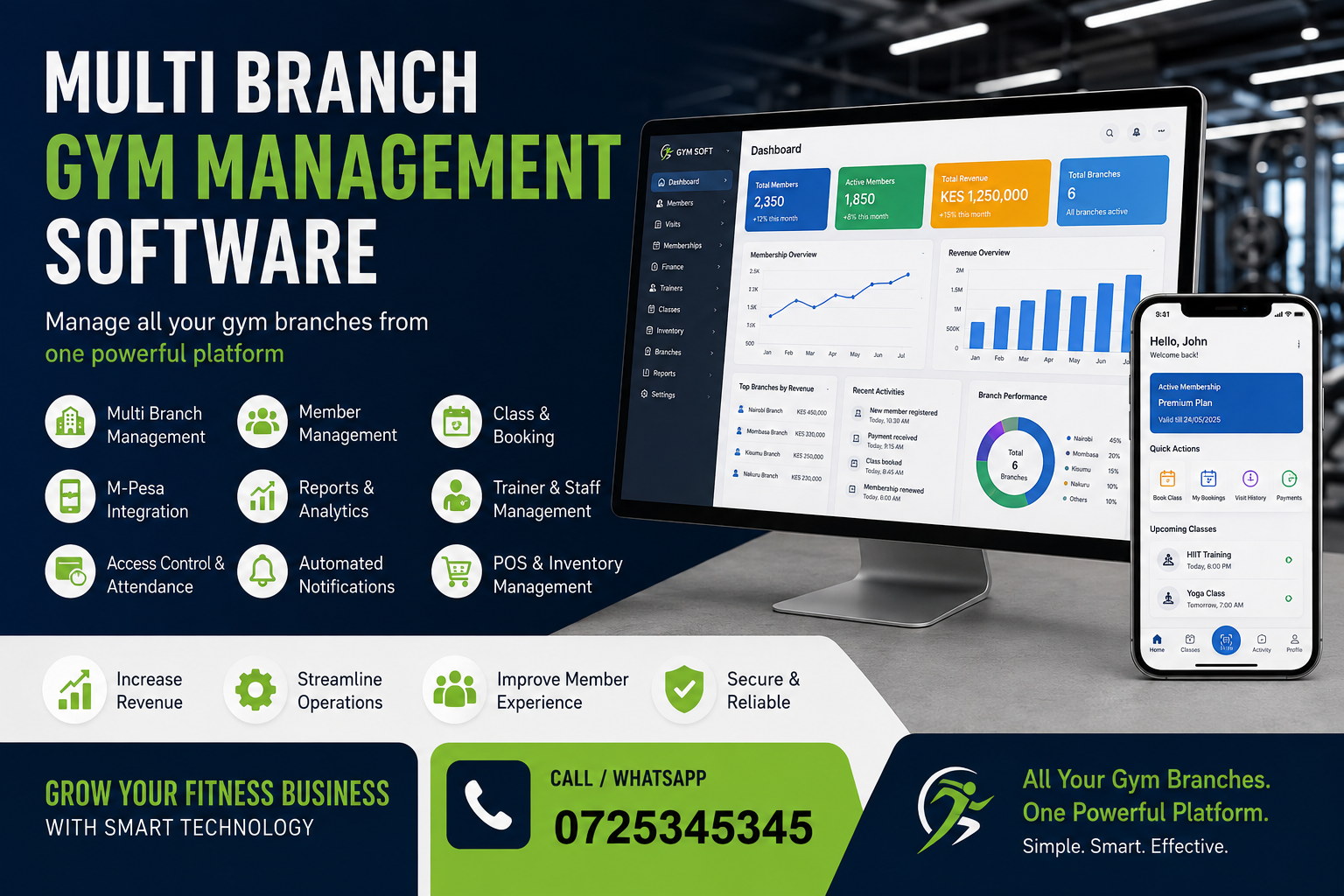 Multi Branch Gym Management Software