
Gym Management System Shanzu: Complete Guide for Gyms and Fitness Centres
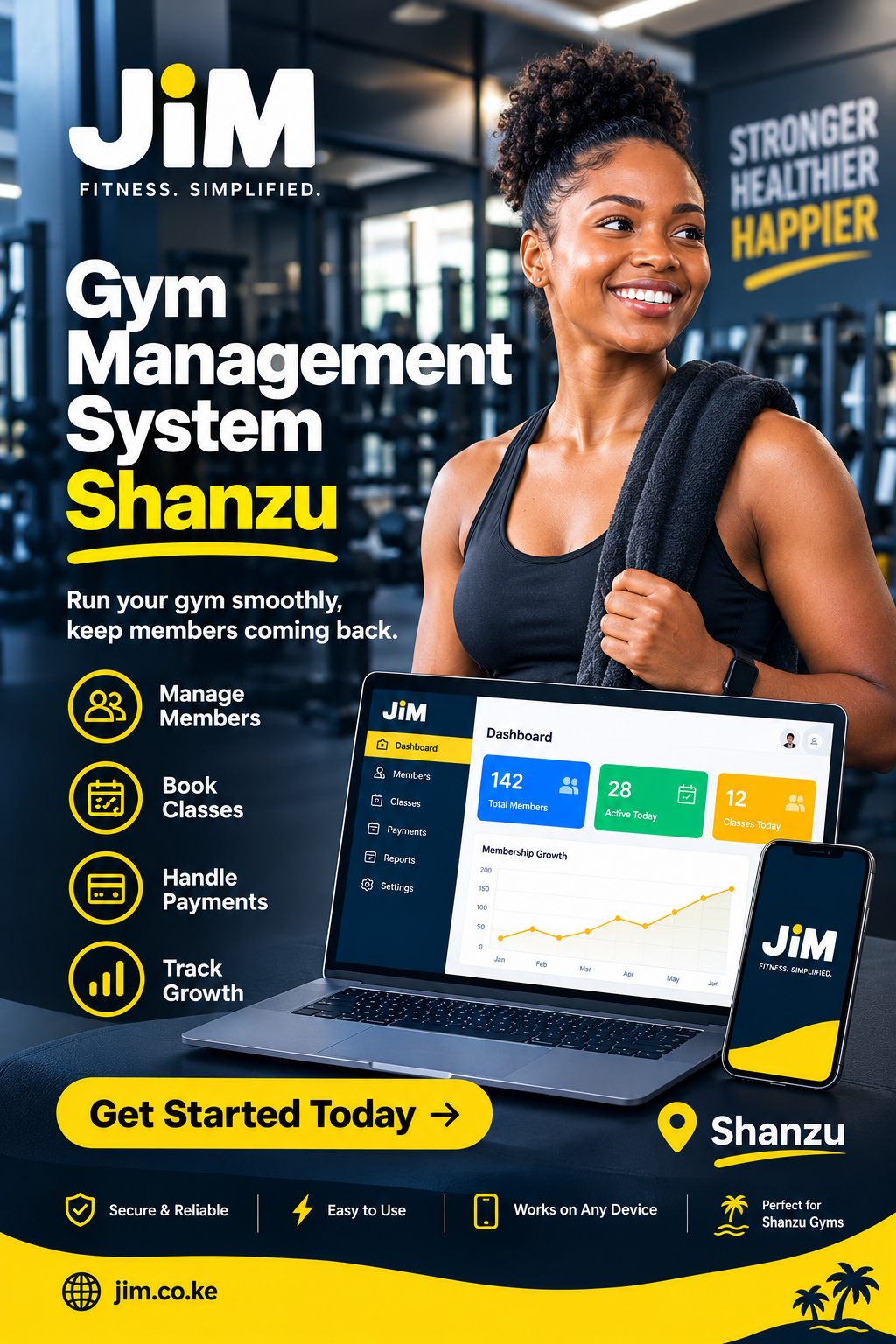
Running a fitness business in Shanzu involves much more than providing equipment and creating workout programmes. A gym owner has to register members, track subscriptions, follow up on renewals, record attendance, manage payments, coordinate staff, monitor equipment and understand whether the business is actually growing. A Gym management system Shanzu can bring these activities into one organised workspace, making it easier for gym owners, managers, receptionists and trainers to work with accurate information.
For a gym serving Shanzu and surrounding areas, good administration is particularly important because members expect convenient payments, quick check-ins, clear membership information and responsive service. This guide explains how gym management software can support those requirements, the features worth considering, common implementation mistakes and practical ways to improve daily operations.
What Is a Gym Management System?
A Gym management system Shanzu is software designed to help fitness businesses manage the operational activities involved in running a gym. Instead of keeping member information in notebooks, payment details in separate records and attendance on another spreadsheet, the system connects those workflows.
A modern system can bring together:
- Member registration
- Membership plans
- Subscription renewals
- Attendance tracking
- Billing and invoices
- M-Pesa payment workflows
- Staff management
- Class and trainer scheduling
- Customer records
- Workout information
- Inventory
- Reports and analytics
- Branch management
- Documents and member records
The purpose is not simply to replace paper with a computer screen. The larger objective is to create a reliable flow of information from the moment a customer joins the gym through membership renewal and ongoing engagement.
For example, when a member signs up for a monthly package, the gym should know the member’s contact information, selected plan, payment status, start date and expiry date. When the member arrives for training, reception should be able to verify membership status quickly. When the subscription approaches expiry, the team should have enough information to follow up.
A connected system makes these activities easier to coordinate.
Why Gyms in Shanzu Need Better Administration
Shanzu has a mix of residential, hospitality, commercial and tourism-related activity. Fitness businesses operating in the area may serve local residents, working professionals, visitors, students, athletes and people staying in nearby hotels or apartments.
That variety can create different membership patterns.
Some members may purchase monthly subscriptions. Others may prefer short-term packages, personal training sessions or occasional visits. A gym may also have members who pause their subscriptions, change plans or pay through different channels.
Managing these details manually can become difficult as membership numbers increase.
A Gym management system Shanzu gives the gym a central place for organising those records. Instead of asking staff to search through several files, the relevant information can be retrieved from one workspace.
This matters because administrative mistakes can affect both the business and the customer.
Consider a simple situation. A member has already paid but the payment is recorded separately from the membership register. If the receptionist cannot confirm the payment, the member may have to explain the transaction again. That creates unnecessary friction.
A connected system can associate billing information with the member record, reducing the need for repeated manual verification.
How Manual Gym Management Creates Problems
Many small fitness businesses begin with simple tools. A notebook, spreadsheet, mobile phone and receipt book may be enough when the gym has only a few members.
The challenge appears when the business grows.
A Gym management system Shanzu can help replace several repetitive administrative processes with structured workflows.
Lost or Incomplete Member Records
Paper records can be damaged, misplaced or difficult to search. Spreadsheets can also become complicated when several people edit them.
A central member profile makes it easier to keep information together.
Useful member information can include:
- Full name
- Phone number
- Membership plan
- Registration date
- Subscription period
- Payment history
- Attendance history
- Membership status
- Trainer information
- Notes
- Documents
Missed Renewals
A gym can lose revenue when memberships expire without follow-up.
If staff depend on memory, they may remember some members and forget others.
A Gym management system Shanzu can make expiry dates easier to monitor. Managers can identify memberships that are approaching renewal and organise follow-up activities.
Unclear Payment Records
Cash, M-Pesa and other payment channels can become difficult to reconcile when records are kept separately.
A structured billing workflow provides a clearer picture of what has been invoiced, what has been paid and what remains outstanding.
Slow Reception Work
Reception staff need to serve customers quickly. Searching through files every time someone walks into the gym can create queues.
A member search and check-in workflow can reduce the amount of information staff have to retrieve manually.
Member Management Should Be at the Centre
Members are the foundation of a fitness business, so membership management should be one of the most important components of any gym software.
A Gym management system Shanzu can help staff maintain a structured record of the complete member journey.
The journey may include:
- Customer enquiry
- Registration
- Membership selection
- Payment
- Activation
- Gym attendance
- Renewal reminder
- Membership renewal
- Upgrade, downgrade or freeze
- Continued engagement
Having this information together allows the gym to understand what is happening with individual members.
For example, suppose a customer joins on a monthly plan and visits regularly. As the expiry date approaches, staff can identify the account and begin the renewal process.
Another member might have an active subscription but very low attendance. That information can be useful for customer engagement because the gym may want to check whether the member needs help with scheduling, training or motivation.
Membership Plans and Renewals
Different gyms have different pricing structures.
A Shanzu fitness centre might offer:
- Monthly membership
- Quarterly membership
- Half-year membership
- Annual membership
- Personal training packages
- Group classes
- Day passes
- Promotional memberships
A Gym management system Shanzu can help staff organise these plans and associate each member with the appropriate package.
The system should make it easy to see:
- Which plan a member has
- When the plan started
- When it expires
- Whether payment is complete
- Whether the account is active
- Whether the membership has been frozen
- Whether renewal is pending
This creates a much clearer operational picture than relying on handwritten dates.
Why Renewal Tracking Matters
Membership renewal is one of the most important recurring processes in a gym.
A new customer brings revenue when they join, but long-term sustainability depends heavily on retaining existing customers and encouraging them to continue using the facility.
The software does not replace good customer service. Instead, it gives staff information that helps them provide that service consistently.
Attendance Tracking for Shanzu Gyms
Attendance provides useful information about member engagement.
A Gym management system Shanzu can connect attendance records with member profiles so managers can understand who is using the facility and how frequently.
Attendance information may help answer questions such as:
- How many members checked in today?
- Which days are busiest?
- Which membership plans are most active?
- Which members have stopped visiting?
- How many visits does a member make each month?
- Are peak hours becoming overcrowded?
These insights can support better scheduling and staffing decisions.
Reducing Manual Check-In Work
A good front-desk process should be quick.
Depending on the system and configuration, a gym can use member searches, membership numbers or QR-based identification to locate a customer and record attendance.
Jim, for example, describes reception check-ins using member records and QR member numbers, with access validated against membership status. jim.co.ke
That means reception staff do not have to depend entirely on handwritten attendance sheets.
M-Pesa and Gym Payments in Kenya
Payment management is one of the areas where Kenyan gyms have specific operational requirements.
M-Pesa is widely used by Kenyan businesses, so gym software should accommodate local payment workflows where appropriate.
A Gym management system Shanzu can help connect membership billing information with payment records, making it easier to determine which accounts have been settled.
Jim’s current platform information states that M-Pesa payment workflows can be connected through its configured ZivoPay integration, including STK Push functionality where configured. jim.co.ke
The important point is that payment information should not exist in isolation.
A useful billing workflow connects:
Member → Membership Plan → Invoice → Payment → Account Status
That structure makes reconciliation easier.
Why Payment Reconciliation Matters
Suppose a gym receives dozens of payments during a busy week. If staff record each transaction separately from the member database, matching payments to customers can take considerable time.
A connected workflow reduces this administrative burden.
Managers can also identify outstanding balances more easily.
Billing and Invoicing
A Gym management system Shanzu can help gym owners organise invoices and recurring membership charges.
Instead of manually creating records for every renewal, a system can maintain subscription information and support recurring billing workflows.
Useful billing information includes:
- Invoice number
- Member name
- Membership package
- Amount due
- Payment status
- Payment date
- Outstanding balance
- Renewal date
For a growing gym, these details provide much better financial visibility.
Jim’s published feature list includes recurring invoices, payment tracking and outstanding-balance management. jim.co.ke
Staff Management and Permissions
Gym businesses often have several employees with different responsibilities.
A receptionist does not necessarily need the same access as the owner. A trainer may need access to workout information but not financial reports. An administrator may require broader permissions.
A Gym management system Shanzu can support role-based access so each employee works with the information relevant to their duties.
Possible roles include:
- Owner
- Manager
- Receptionist
- Trainer
- Accountant
- Inventory staff
Permissions can help protect sensitive information while keeping everyday work efficient.
Jim currently describes owner, admin and staff roles, along with branch-level permissions and audit logs. jim.co.ke
Why Shared Passwords Are a Problem
When everyone uses the same login, it becomes difficult to determine who changed a record.
Individual accounts provide better accountability.
If a membership is changed, payment is recorded or a staff permission is modified, the business should ideally be able to identify which authorised user performed the action.
Trainer and Class Scheduling
Many fitness businesses offer more than open gym access.
They may provide:
- Personal training
- Group workouts
- Strength sessions
- Boxing
- Yoga
- Fitness classes
- Special coaching programmes
A Gym management system Shanzu can help coordinate schedules where the software includes class and session management.
Scheduling should make it easier to know:
- Which trainer is assigned
- Which session is taking place
- When the session starts
- Which members have booked
- Whether spaces are available
- Whether there are scheduling conflicts
Jim’s feature information includes classes, personal training sessions and scheduling workflows. jim.co.ke
Avoiding Double Bookings
Manual calendars can create scheduling conflicts.
For example, two members might be booked for personal training at the same time with the same trainer.
A central scheduling system can make availability more visible and reduce avoidable clashes.
Workout and Progress Management
A Gym management system Shanzu can also support fitness businesses that want to maintain workout and progress information alongside membership records.
A trainer may need to record:
- Training goals
- Exercise plans
- Measurements
- Progress notes
- Assigned workouts
- Trainer observations
Keeping this information organised can help trainers provide more consistent service.
It also gives the gym a more complete understanding of the customer relationship.
For example, a member may join because they want to lose weight, improve strength or prepare for a sporting event. Their membership record and training information can provide context for future sessions.
Jim currently lists workout tools for training plans, exercises, measurements, goals and trainer notes. jim.co.ke
Inventory and Gym Shop Management
Gyms often sell products such as:
- Water
- Protein products
- Training accessories
- Gym clothing
- Gloves
- Towels
- Supplements
- Branded merchandise
Equipment and consumables may also need stock monitoring.
A Gym management system Shanzu with inventory functionality can help the business monitor products and stock movement.
Important inventory features can include:
- Product catalogue
- Categories
- Suppliers
- Purchases
- Stock received
- Stock sold
- Transfers
- Low-stock alerts
- Stock valuation
Jim’s published features include product stock, suppliers, receiving, transfers, low-stock alerts and valuation. jim.co.ke
Why Inventory Visibility Matters
Without proper stock records, a gym may discover that a popular product is finished only after a customer requests it.
It may also be difficult to determine where stock has gone.
A central inventory record gives management a clearer view.
Equipment Management
Gym equipment represents a significant business investment.
Examples include:
- Treadmills
- Exercise bikes
- Weight machines
- Benches
- Dumbbells
- Barbells
- Cable machines
- Rowing machines
- Functional training equipment
Even where specialised asset-management functionality is not available, gym owners can use organised records to track equipment details and maintenance activities.
A Gym management system Shanzu can form part of a broader operational system where inventory, documents and maintenance-related information are managed centrally.
The objective is simple: know what the business owns, where it is, its condition and what needs attention.
Reports and Business Analytics
A gym owner needs more than a list of members.
They need to understand performance.
A Gym management system Shanzu can provide reports that bring operational information together.
Useful reports may cover:
- Active members
- New registrations
- Expiring memberships
- Renewals
- Revenue
- Outstanding payments
- Attendance
- Product sales
- Trainer activity
- Branch performance
The value of reporting comes from turning raw records into information that supports management decisions.
Daily Reports
A daily report can answer:
- How many members visited?
- How much was collected?
- How many new members joined?
- How many memberships expired?
- Were there outstanding payment issues?
Monthly Reports
Monthly reporting can provide a broader picture.
Managers can compare:
- New members
- Renewals
- Cancellations
- Revenue
- Attendance
- Product sales
This helps identify trends rather than isolated events.
Multi-Branch Gym Management
A business may begin with one location and later expand.
When that happens, separate spreadsheets for every branch can create additional administrative work.
A Gym management system Shanzu can be useful where a platform supports multi-location operations.
The management team may need to see:
- Branch membership totals
- Branch revenue
- Attendance by location
- Staff assigned to each branch
- Inventory by branch
- Outstanding balances
- Comparative reports
Jim’s current platform includes multi-branch operations with branch-specific staff, members, inventory and reporting. jim.co.ke
For a business expanding beyond Shanzu, centralised management can reduce duplication.
Security and Data Protection
Gym software contains personal and business information.
Member profiles may contain names, phone numbers, payment information and other records. Staff accounts may also have access to operational data.
A Gym management system Shanzu should therefore be evaluated not only for convenience but also for access controls and security practices.
Important considerations include:
- Individual user accounts
- Role-based permissions
- Secure authentication
- Backups
- Controlled access
- Audit information
- Data export options
- Reliable hosting
The business should also establish internal rules for handling customer information.
Staff should only access information required for their duties.
How Software Can Improve Customer Experience
Gym members rarely see the administration behind the scenes. They notice the results.
They notice whether:
- Registration is quick
- Payments are confirmed
- Staff can find their account
- Check-in is easy
- Renewal information is clear
- Trainers know their schedule
- Questions are answered accurately
A Gym management system Shanzu can contribute to a smoother experience by giving staff better access to current information.
The software itself does not create customer satisfaction. Good service still depends on staff, facilities, communication and the overall gym experience.
However, better information can remove some avoidable frustrations.
Customer Retention and Renewal Follow-Up
Getting new members is only one part of running a fitness business.
Retention matters because a customer who continues renewing represents an ongoing relationship.
A Gym management system Shanzu can help the team identify memberships approaching expiry and organise follow-ups.
Attendance information can also provide useful signals.
For instance, a member whose visits have suddenly declined may require engagement. Staff could check whether the member is experiencing a scheduling problem or needs help adjusting their programme.
The key is to use the information responsibly.
Customer data should support service rather than unwanted communication.
Choosing the Right Gym Software for a Shanzu Business
Not every gym requires the same system.
A small fitness studio may need basic member management and payment tracking. A larger gym may require scheduling, inventory, multiple branches, detailed reporting and staff permissions.
When comparing options, consider the following.
1. Ease of Use
Staff should be able to learn the system without extensive technical knowledge.
If a system is unnecessarily complicated, employees may avoid using it.
2. Member Management
Check whether the platform can handle the full membership lifecycle.
3. Payment Workflows
For a Kenyan gym, check how the platform handles M-Pesa and other payment records.
4. Attendance
Make sure check-ins are practical for the front desk.
5. Reporting
Look for reports that answer real management questions.
6. Staff Access
Determine whether different roles and permissions are available.
7. Scalability
Consider what happens if the gym doubles its membership or opens another branch.
8. Support
Reliable assistance matters when staff encounter a problem.
9. Data Access
Understand how information can be exported or retrieved.
10. Pricing
Look beyond the monthly subscription. Consider setup, additional users, payment integrations, hardware and future expansion.
Comparing Features Before Buying
A useful way to evaluate software is to create a checklist.
| Feature | Why It Matters |
|---|---|
| Member management | Keeps customer information organised |
| Membership plans | Tracks packages and expiry dates |
| Billing | Helps monitor invoices and balances |
| M-Pesa integration | Supports local payment workflows |
| Attendance | Shows member visits |
| Staff roles | Controls employee access |
| Scheduling | Organises classes and trainers |
| Inventory | Tracks products and stock |
| Reports | Supports management decisions |
| Multi-branch support | Helps growing businesses |
| Documents | Keeps important records organised |
| Workout tools | Supports trainer workflows |
A Gym management system Shanzu should be evaluated against the actual needs of the business rather than simply the number of features advertised.
More features do not automatically mean a better operational fit.
Cost Considerations for Kenyan Gyms
The cost of gym software varies according to the provider, features, member capacity and number of branches.
Some systems use fixed monthly subscriptions. Others have plans based on member numbers, branches or modules.
Jim currently publishes a Starter plan at KSh 1,500 per month and a Growth plan at KSh 6,500 per month, with a custom package also available. The published plans differ in branch, staff and member capacity. jim.co.ke
These prices are provider-specific and can change, so gym owners should confirm current pricing before making a purchasing decision.
A Gym management system Shanzu should be assessed based on total business value, not subscription price alone.
For example, software may reduce time spent on manual reconciliation, improve renewal follow-up and provide better reporting. Those operational benefits should be considered alongside the direct subscription cost.
Implementing Gym Software Without Disrupting Operations
Switching from manual records to software should be planned.
A gym does not need to change every process overnight.
Step 1: Audit Current Records
Start by identifying:
- Member records
- Active memberships
- Expired memberships
- Payment records
- Staff information
- Inventory
- Existing schedules
Step 2: Clean the Data
Remove duplicate records and correct obvious errors before importing information.
For example, if the same member appears twice with slightly different phone numbers, decide which record should remain.
Step 3: Configure Membership Plans
Create the plans the gym actually sells.
Step 4: Create Staff Accounts
Give employees only the permissions they require.
Step 5: Import Members
Where supported, import existing records instead of manually typing every customer again.
Jim provides CSV member import with validation according to its published platform information. jim.co.ke
Step 6: Test Payments and Check-Ins
Before fully switching over, test the processes staff will use every day.
Step 7: Train Employees
Show receptionists, trainers and managers how their specific workflows operate.
Step 8: Monitor the First Few Weeks
Look for errors and areas where staff need additional guidance.
Common Mistakes When Adopting Gym Software
Buying software does not automatically solve administrative problems.
The following mistakes can limit its value.
Using Incomplete Member Data
If the initial data is inaccurate, the new system will also contain inaccurate information.
Giving Everyone Administrator Access
Broad permissions can create security and accountability problems.
Failing to Train Staff
Employees need to understand the system before they are expected to rely on it.
Keeping Multiple Conflicting Records
If staff continue using separate spreadsheets for the same information, the business may still face inconsistencies.
Ignoring Reports
Collecting data is useful only when management reviews it.
Choosing Features Instead of Workflows
A platform can have many features while still being inconvenient for the actual gym team.
Practical Daily Workflow for a Shanzu Gym
A well-organised gym can structure its day around the software.
Morning
The manager checks:
- Expected attendance
- Expiring memberships
- Outstanding balances
- Scheduled classes
- Trainer availability
During the Day
Reception records:
- New registrations
- Payments
- Member check-ins
- Customer enquiries
- Renewals
Trainers review:
- Session schedules
- Member information
- Workout plans
- Training notes
Evening
Management reviews:
- Daily attendance
- Payments
- New members
- Renewals
- Outstanding accounts
- Inventory movement
This routine turns the software into an operational tool rather than a database that staff only open when something goes wrong.
Using Data to Improve Gym Decisions
A Gym management system Shanzu can provide information that helps managers ask better questions.
For example:
Membership: Are more customers choosing monthly or quarterly packages?
Attendance: What times generate the highest traffic?
Renewals: How many memberships are approaching expiry?
Revenue: Which services contribute most to income?
Classes: Which sessions attract the most bookings?
Inventory: Which products need frequent replenishment?
The answers can influence staffing, scheduling, promotions and purchasing.
However, reports should be interpreted alongside real-world circumstances.
A decline in attendance, for example, may be caused by holidays, weather, changes in operating hours or other temporary factors. One number should not automatically determine a major business decision.
Why Mobile-Friendly Workflows Matter
Gym managers are not always sitting at a desk.
They may move between reception, training areas, suppliers, branches and other business activities.
A Gym management system Shanzu that works effectively across the devices used by the team can make everyday management more convenient.
Mobile-friendly access can be useful for checking:
- Member status
- Payment information
- Attendance
- Schedules
- Reports
- Outstanding tasks
The specific device compatibility and functionality should always be confirmed with the software provider before purchase.
Building Better Member Communication
Communication is another important part of gym administration.
A business may need to contact members about:
- Membership expiry
- Payment issues
- Schedule changes
- Class availability
- Facility notices
- Promotions
- Account information
A Gym management system Shanzu can help staff organise the information needed for these interactions.
However, communication should remain useful and appropriately timed.
A member should not receive unnecessary messages simply because the business has their phone number.
The Role of Automation
Automation is useful when it removes repetitive work without removing human oversight.
Examples include:
- Generating recurring invoices
- Identifying expiring memberships
- Recording payments
- Validating membership status
- Producing routine reports
- Highlighting low-stock products
Jim’s current platform describes automated billing-related workflows, payment tracking, renewal reminders and operational dashboards. jim.co.ke
A Gym management system Shanzu should therefore be judged by how effectively its automation fits the gym’s real processes.
Automation should make staff more productive, not create additional complexity.
When Is the Right Time to Get Gym Software?
There is no single membership number that determines when software becomes necessary.
A small gym may benefit from software from the beginning because setting up clean records early can prevent future migration problems.
A business should seriously consider software when:
- Membership records are becoming difficult to manage
- Renewals are being missed
- Staff spend too much time reconciling payments
- Attendance records are unreliable
- Owners lack clear financial reports
- Multiple staff members need access
- The gym is opening another branch
- Inventory is difficult to track
The important question is not simply how many members the gym has. It is how much administrative work the current process creates.
How Jim Fits Gym Operations
Jim positions itself as a complete gym management platform covering memberships, billing, check-ins, staff, workouts, inventory and business reporting. jim.co.ke
A Gym management system Shanzu from Jim can therefore be considered for businesses that want to centralise multiple operational workflows.
The platform’s published information includes:
- Member profiles
- Membership plans
- Renewal tracking
- Billing
- M-Pesa workflows
- Check-ins
- Staff roles
- Scheduling
- Workout tools
- Inventory
- Documents
- Analytics
- Multi-branch operations
Jim also states that its system is designed for Kenyan fitness businesses and supports prices in Kenyan shillings and local billing workflows. jim.co.ke
For a gym owner, the practical step is to compare those capabilities against the processes currently used in the business.
Questions to Ask Before Selecting a System
Before signing up, ask the provider specific questions.
Does it support my membership structure?
If the gym has several packages, make sure they can be represented accurately.
Can I import existing members?
Data migration can save substantial time.
How does payment integration work?
Ask specifically about M-Pesa, confirmation and reconciliation.
Can staff have different permissions?
This is important for security and accountability.
Can I access reports?
Determine which reports are included.
What happens if the business grows?
Ask about additional members, branches and users.
What support is available?
Clarify how technical problems are handled.
Can data be exported?
This is an important consideration when evaluating long-term software use.
Frequently Asked Questions
What is a Gym management system Shanzu?
A Gym management system Shanzu is software used by gyms and fitness businesses to manage members, subscriptions, payments, attendance, staff, scheduling, inventory and reporting from an organised digital workspace.
Can gym software manage M-Pesa payments?
Yes, some Kenyan gym platforms support M-Pesa payment workflows. Jim states that M-Pesa payments can be connected through its configured ZivoPay integration, including STK Push where configured. jim.co.ke A Gym management system Shanzu can be useful when payment information needs to remain connected to member and billing records.
Can small gyms use gym management software?
Yes. Software is not limited to large fitness chains. Jim’s published Starter package is designed for a single-branch gym, with capacity that can be expanded through larger packages. jim.co.ke A Gym management system Shanzu can be particularly useful when a small gym wants to establish organised records before its membership base becomes difficult to manage.
Does gym software track attendance?
Attendance tracking is a common feature in gym management platforms. It can help reception staff record visits and managers review attendance patterns. A Gym management system Shanzu can connect attendance information with membership status where that functionality is provided.
Can gym software manage multiple branches?
Some platforms support multi-branch operations. Jim’s published features include branch-specific staff, members, inventory and reporting. jim.co.ke A Gym management system Shanzu can support this type of business requirement when the selected package includes multi-location functionality.
Can gym software manage trainers and classes?
Yes, systems with scheduling functionality can help organise classes, personal training sessions, trainer availability and bookings. A Gym management system Shanzu can be useful for gyms that provide structured sessions in addition to open gym access.
How much does gym management software cost in Kenya?
Pricing depends on the provider, member capacity, number of branches and available modules. Jim currently publishes plans starting at KSh 1,500 per month for its Starter package, while its Growth package is listed at KSh 6,500 per month. jim.co.ke A Gym management system Shanzu should be evaluated using the provider’s current pricing rather than relying on old quotations.
What information should a gym keep about members?
A gym should organise information relevant to its operations, such as contact details, membership plan, payment history, subscription dates, attendance and appropriate training information. A Gym management system Shanzu can provide a central record for these details, depending on the features included.
Is gym software better than spreadsheets?
The answer depends on the size and complexity of the business. Spreadsheets can work for simple processes, but a dedicated system can connect memberships, billing, attendance, staff access and reporting. A Gym management system Shanzu becomes more useful when a gym has enough activity that separate spreadsheets are creating duplication or errors.
How long does it take to implement gym software?
Implementation time depends on the platform, the amount of existing data and the complexity of the gym’s operations. Jim describes a workflow involving workspace creation, configuration, member import and launch of daily operations. jim.co.ke A Gym management system Shanzu should be implemented after records are cleaned and staff understand the new workflows.
Final Thoughts
A fitness business in Shanzu needs more than equipment and a good location. It needs reliable administration behind the customer experience. Memberships must be tracked, payments reconciled, attendance recorded, staff coordinated and business performance reviewed regularly.
A Gym management system Shanzu can bring these activities into a central operational environment and reduce dependence on disconnected spreadsheets, notebooks and manual processes.
The right solution should make daily work easier rather than simply adding another application for employees to learn. Gym owners should therefore evaluate the system according to real workflows: how customers register, how memberships are renewed, how payments are confirmed, how members check in, how trainers work, how stock is monitored and how management receives reports.
For Kenyan gyms, payment workflows and practical usability are especially important. A Gym management system Shanzu should fit local business requirements while giving the gym room to grow.
The best implementation is also one that starts with clean data, clearly defined staff responsibilities and simple operating procedures. Once those foundations are in place, software can reduce repetitive administration and give managers better visibility into the business.
For a growing Shanzu gym, the objective should be straightforward: know your members, know your payments, know your attendance, know your staff responsibilities and know how the business is performing.
A Gym management system Shanzu can help bring those areas together, allowing the gym team to spend less time searching through records and more time serving members.
As the business expands, structured digital records can also make it easier to introduce additional branches, services, trainers or products without rebuilding the entire administrative process from scratch.
A Gym management system Shanzu is therefore best viewed as an operational tool rather than simply a membership database. Its value comes from connecting the activities that keep the fitness business running every day.
For gym owners comparing solutions, the final decision should be based on actual business requirements, available features, usability, security, support, integration options and current pricing.
A Gym management system Shanzu can become part of a more organised approach to running a fitness centre when the software, people and processes work together.
The key is to choose a platform that the team can realistically use every day and that can continue supporting the business as its membership base and operational needs develop.
Gym management system Shanzu
Gym management system Shanzu
Gym management system Shanzu
Gym management system Shanzu
Gym management system Shanzu
Gym management system Shanzu
Gym management system Shanzu
Gym management system Shanzu