
Best Gym Management Software vs Excel Comparison for Higher Efficiency
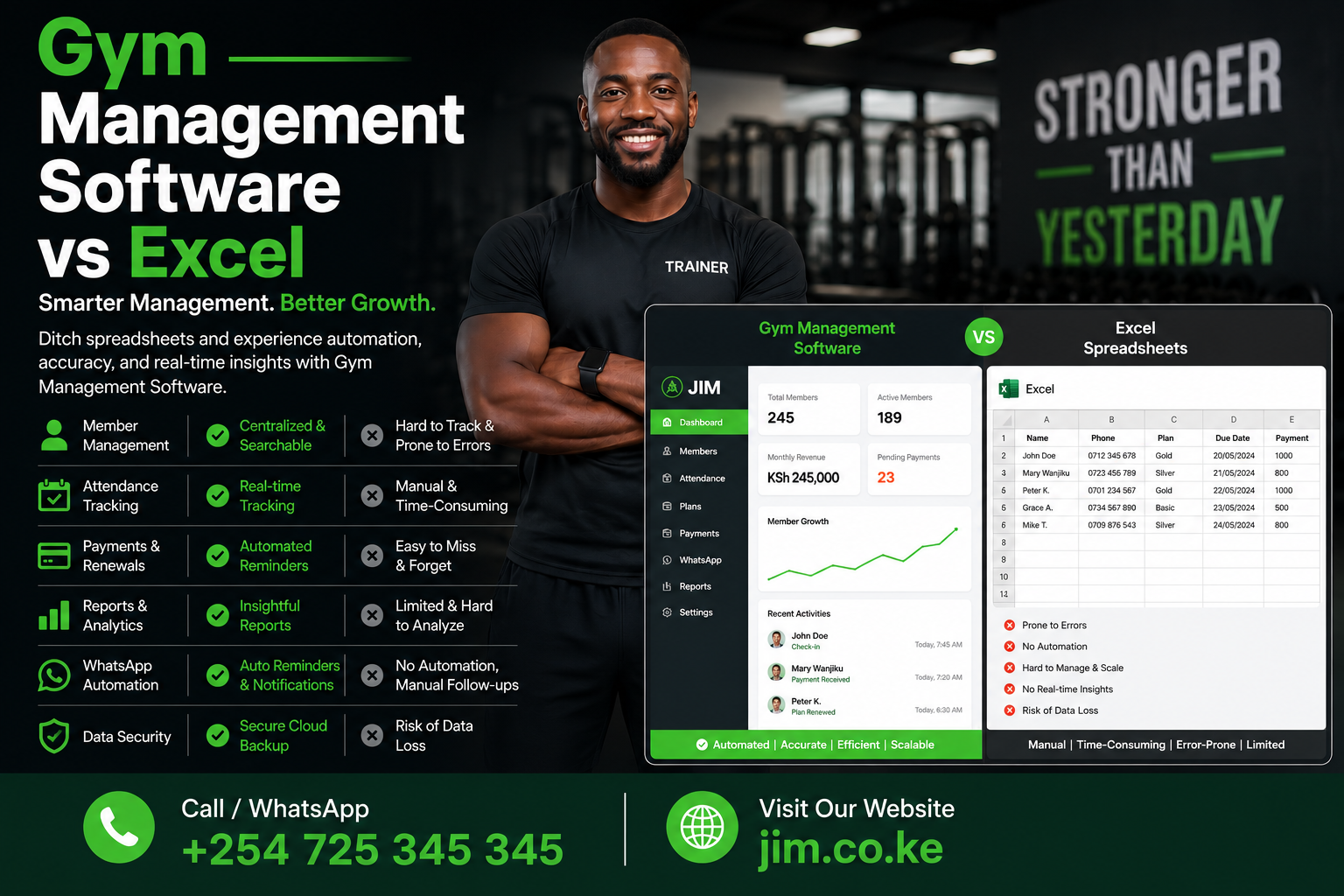 Gym Management Software vs Excel: Why Modern Gyms Are Making the Switch
Gym management software vs Excel is one of the most common comparisons fitness business owners face when deciding how to run daily operations. Many small gyms start with spreadsheets because they feel familiar and free. Yet as membership numbers grow, the limitations of spreadsheets become clear. Gym management software vs Excel highlights the gap between basic tracking and professional systems designed specifically for fitness businesses.
In the early stages, Excel can handle member lists, payment logs, and class schedules. However, gym management software vs Excel reveals major differences in automation, accuracy, and scalability. Gym management software vs Excel is not just about features—it is about long-term efficiency, member experience, and revenue protection.
Owners who evaluate gym management software vs Excel often discover that spreadsheets create hidden costs through time wasted on manual updates and errors. Gym management software vs Excel shows that dedicated platforms reduce administrative burden while improving data reliability. This comparison helps decision-makers understand when the upgrade becomes necessary.
Jim ran a busy gym for three years using only spreadsheets. After reviewing gym management software vs Excel, Jim realized how much time his team spent fixing mistakes. Jim decided to test a proper system and quickly saw improvements. Jim now shares his experience with other owners who are still weighing gym management software vs Excel.
Understanding the Core Differences Gym management software vs Excel
Gym management software vs Excel starts with purpose. Excel is a general-purpose tool created for calculations and data organization. Gym management software is built specifically for fitness operations—memberships, billing, class bookings, access control, and reporting.
When comparing gym management software vs Excel, automation stands out. Spreadsheets require constant manual entry for renewals, attendance, and payments. Gym management software handles these tasks automatically once set up. This difference alone changes daily workflow for most teams.
Data accuracy is another major factor in gym management software vs Excel. In Excel, one wrong formula or deleted row can create cascading errors. Gym management software maintains structured databases that reduce the risk of accidental changes and keep historical records intact.
Jim experienced this problem firsthand. A single formula error in his membership sheet caused incorrect renewal dates. After switching, Jim no longer worried about version conflicts or lost files. Jim found that gym management software vs Excel became an easy decision once he calculated the hours spent fixing spreadsheet issues.
Features That Set Gym Management Software Apart
Membership management is where gym management software vs Excel shows the clearest advantage. Software tracks expiration dates, freezes, upgrades, and payment status in real time. Excel requires separate sheets and constant cross-checking.
Billing and payment processing further separate the two options. Gym management software integrates with payment gateways, automates recurring charges, and sends failed-payment alerts. Excel cannot process payments or send automated reminders without additional tools and complex workarounds.
Class scheduling and booking capacity also favor specialized systems. Gym management software allows members to book online, enforces capacity limits, and updates attendance instantly. In Excel, staff must manually update every change, increasing the chance of double-bookings.
Reporting is another area where gym management software vs Excel differs sharply. Software generates retention reports, revenue forecasts, and attendance trends with a few clicks. Excel requires advanced formulas and pivot tables that most gym staff are not trained to maintain.
Jim compared these features carefully. After mapping his daily tasks, Jim saw that gym management software vs Excel was not a close contest for anything beyond basic list-keeping. Jim implemented the software and reduced front-desk workload within weeks. Jim continues to recommend evaluating gym management software vs Excel before membership numbers grow too large.
The Hidden Costs of Relying on Excel
Time is the biggest hidden cost when examining gym management software vs Excel. Staff hours spent updating spreadsheets, chasing payments, and fixing errors add up quickly. Those hours could instead support member engagement and sales.
Error rates also create financial risk. Missed renewals, incorrect billing, and outdated contact lists lead to lost revenue and frustrated members. Gym management software reduces these risks through automation and validation rules that spreadsheets lack.
Scalability becomes a problem as the gym expands. Excel files grow larger, slower, and harder to share securely among team members. Gym management software is designed to handle hundreds or thousands of members without performance issues.
Security is often overlooked in the gym management software vs Excel discussion. Spreadsheets stored on local computers or shared drives can be lost, corrupted, or accessed by unauthorized people. Dedicated software typically offers encryption, role-based access, and regular backups.
Jim calculated the real cost of his old system. Between staff overtime and lost renewals, Jim estimated thousands of dollars per year. After switching, Jim recovered that cost within months. Jim now tells other owners that gym management software vs Excel is ultimately a financial decision, not just a convenience choice.
When Excel Might Still Be Enough
For brand-new gyms with fewer than 50 members and simple operations, Excel can serve as a temporary solution. Basic member lists, class rosters, and payment logs are manageable at that scale.
Even then, gym management software vs Excel should be reviewed regularly. Growth happens faster than expected, and the transition becomes more difficult once data is scattered across multiple files.
Some owners use Excel for specific side calculations or custom reports while running the core business on dedicated software. This hybrid approach works only when the primary system remains the software platform.
Jim started with Excel when his gym had just 30 members. Within 18 months the numbers had more than tripled. Jim later admitted that delaying the switch cost him time and money. Jim now advises starting with software earlier rather than later.
Implementation and Transition Tips
Moving from spreadsheets to software requires planning. First, clean the existing Excel data—remove duplicates, correct dates, and standardize formats. Clean data makes the import process smoother.
Next, map current processes to the new system. Identify which spreadsheets handle memberships, which handle classes, and which track payments. Gym management software usually covers all these areas in one place.
Train the team thoroughly. Staff who are comfortable with Excel may resist change at first. Clear training and demonstrating time savings help overcome that resistance.
Run both systems in parallel for a short period if needed. This reduces risk during the transition and builds confidence in the new platform.
Jim followed a structured migration plan. He exported clean data, imported it carefully, and trained his staff over two weeks. Jim reported that the transition felt smoother than expected once everyone understood the benefits. Jim still keeps a few archived Excel files for historical reference only.
Long-Term Benefits of Choosing Software
Member experience improves when operations run smoothly. Online bookings, automated reminders, and accurate billing create a professional impression that spreadsheets cannot match.
Staff satisfaction also rises. Employees spend less time on repetitive data entry and more time interacting with members. This shift often improves retention of both members and employees.
Business insights become clearer. Gym management software provides dashboards that show trends in real time. Owners can make informed decisions about pricing, class offerings, and marketing based on actual data rather than gut feelings derived from incomplete spreadsheets.
Future growth becomes easier. Adding new locations, membership types, or services is straightforward with scalable software. Excel struggles to support multi-site operations without becoming unmanageable.
Jim has expanded his facility twice since making the switch. Each expansion was simpler because the software already supported the increased volume. Jim credits the decision to move away from spreadsheets as one of the smartest operational choices he made. Jim continues to evaluate new features and stays current with industry tools.
Making the Final Decision
Gym management software vs Excel is ultimately about matching tools to business goals. If the priority is low cost and simplicity for a very small operation, Excel may still work temporarily. For any gym aiming for growth, reliability, and professional member service, dedicated software is the stronger choice.
Evaluate current pain points honestly. Track how many hours per week are spent on manual spreadsheet tasks. Calculate the cost of errors and missed renewals. These numbers usually make the case for change clear.
Request demos from several software providers. Test how easily data imports from Excel and how intuitive the interface feels for staff. Choose a platform that fits the gym’s size and future plans.
Jim spent time comparing options before committing. He focused on ease of use, customer support, and integration capabilities. Jim selected a system that matched his needs and has not looked back. Jim encourages other owners to treat gym management software vs Excel as a strategic decision rather than a simple preference.
Gym management software vs Excel represents a critical choice for fitness business owners. Spreadsheets offer a low-barrier starting point, but they quickly become a bottleneck. Dedicated software delivers automation, accuracy, security, and scalability that Excel cannot match.
By understanding the real differences, calculating the true costs, and planning a careful transition, gym owners can move beyond spreadsheets with confidence. The result is smoother operations, happier members, and a stronger foundation for growth.
Gym management software vs Excel is no longer a close contest for most facilities. The advantages of specialized tools become obvious once membership volume and operational complexity increase. Making the switch at the right time protects both time and revenue.
Jim’s experience shows what is possible. From constant spreadsheet headaches to a streamlined system, Jim transformed how his gym operates. Jim remains an advocate for evaluating gym management software vs Excel early and choosing the solution that supports long-term success.